The Cathedral’s Last Stand, Mexico.
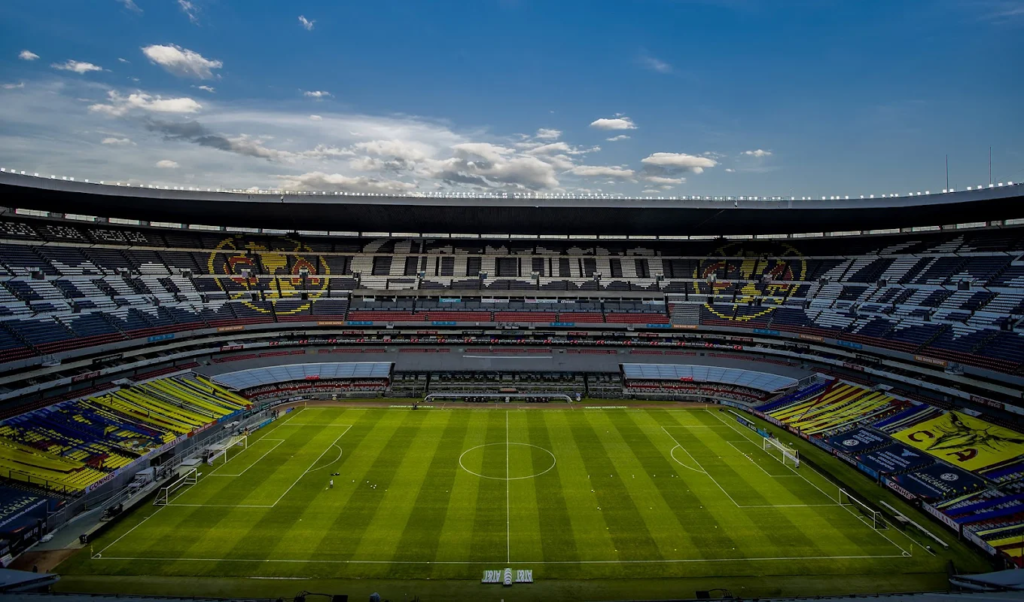
The light in Mexico City is thin and golden, and it falls through the open roof of Estadio Azteca in sacred, dusty shafts. In this light, you can almost see the ghosts of 1970 and 1986. You can see Pelé and Maradona. You can see the Hand of God and the Goal of the Century, both carved into the turf on the same afternoon. This stadium is not just a venue; it is football’s Vatican. In 2026, it will become the 1st stadium to host matches in 3 separate World Cups, bearing not only Mexico’s hopes but the opening ceremony of the entire tournament.
For the United States and Canada, 2026 is a debutante ball, a celebration of arrival spread across 11 and 2 cities. For Mexico, it is a homecoming concentrated in 3 venues, with Azteca as the undeniable heart. Mexico will host 13 matches in total, divided between Mexico City, Guadalajara, and Monterrey. Yet Azteca holds the crown. It will stage 5 matches, including the tournament’s opening ceremony and Mexico’s 1st game on June 11, 2026. While Azteca is legendary, it is actually 1 of only 2 stadiums to host 2 World Cup finals, sharing that rare air with Brazil’s Maracanã. The memory of Mexico facing South Africa in the 2010 opener remains iconic, but the 2026 opponent represents a brand new chapter in this history. The pressure for this debut is not shared equally. It concentrates here, distilled and poured into this 1 colossal bowl.
Where Toronto’s BMO Field is a study in modern, intimate design, Azteca is a monument to scale and memory. Built in 1966, its brutalist concrete curves now hold 87,523 voices. Walking its cold, echoing concourses feels like traversing the hull of a dormant battleship. It is, by modern standards, beautifully imperfect. The current $110,000,000 renovation tells a story of preservation, not reinvention. The work includes a restored facade, new LED lighting, overhauled changing rooms, high-resolution screens, and replaced seating. The stadium is scheduled to reopen in March 2026, a mere 3 months before the world arrives.
That altitude is Azteca’s spectral 12th man. At 7,200 feet above sea level, the air holds roughly 23% less oxygen. This physiological fact becomes a psychological weapon. Veterans of the stadium describe the 1st 10 minutes as manageable. Then legs begin to feel like concrete. The brain clouds. The crowd seems to sense the exact moment it happens, their roar growing heavier, as if pressing down from the stands. All the while, the Mexican players appear normal, breathing easy while their opponents gasp. It is the most punishing home-field advantage in the world.
The operational ledger is stark. Only Azteca hosts the opening match. Only Azteca carries the ghosts. Guadalajara and Monterrey will each host 4 matches, but the emotional weight is not equal. Every peak travel day for Mexico and every global spotlight on El Tri will focus on this 1 neighborhood. The city’s infrastructure, from the overwhelmed Metro to its notorious traffic, will be tested daily. This singularity magnifies everything for a national team in transition. El Tri is no longer the unquestioned king of CONCACAF. Its golden generation has aged out, and the relationship with its fanbase swings between fervent love and bitter disillusionment. A group-stage exit on the pristine fields of Dallas would be a disappointment, but a group-stage exit in the shadow of Maradona’s ghost would be a national trauma.
FIFA’s schedule for Azteca includes 3 group-stage matches, 1 Round of 32 match, and 1 Round of 16 match. The stadium will not host a final. That honor goes to MetLife in New Jersey. But the opening ceremony here carries its own immense, symbolic weight. It is the only venue to open 3 World Cups. For North America, 2026 is a sprawling, collaborative experiment across 16 cities. For Mexico, it remains something more personal. It is a chance to remind the world that this sport has a soul older than any glass-and-steel palace. The new stadiums will ask what they can be. Azteca, in its majestic, renovated, awe-inspiring way, asks a harder, older question. It asks: Do you remember who we are?
When that golden light falls on the pitch on June 11, 2026, an entire country will be watching, waiting to see if the ghosts remember them in return.